
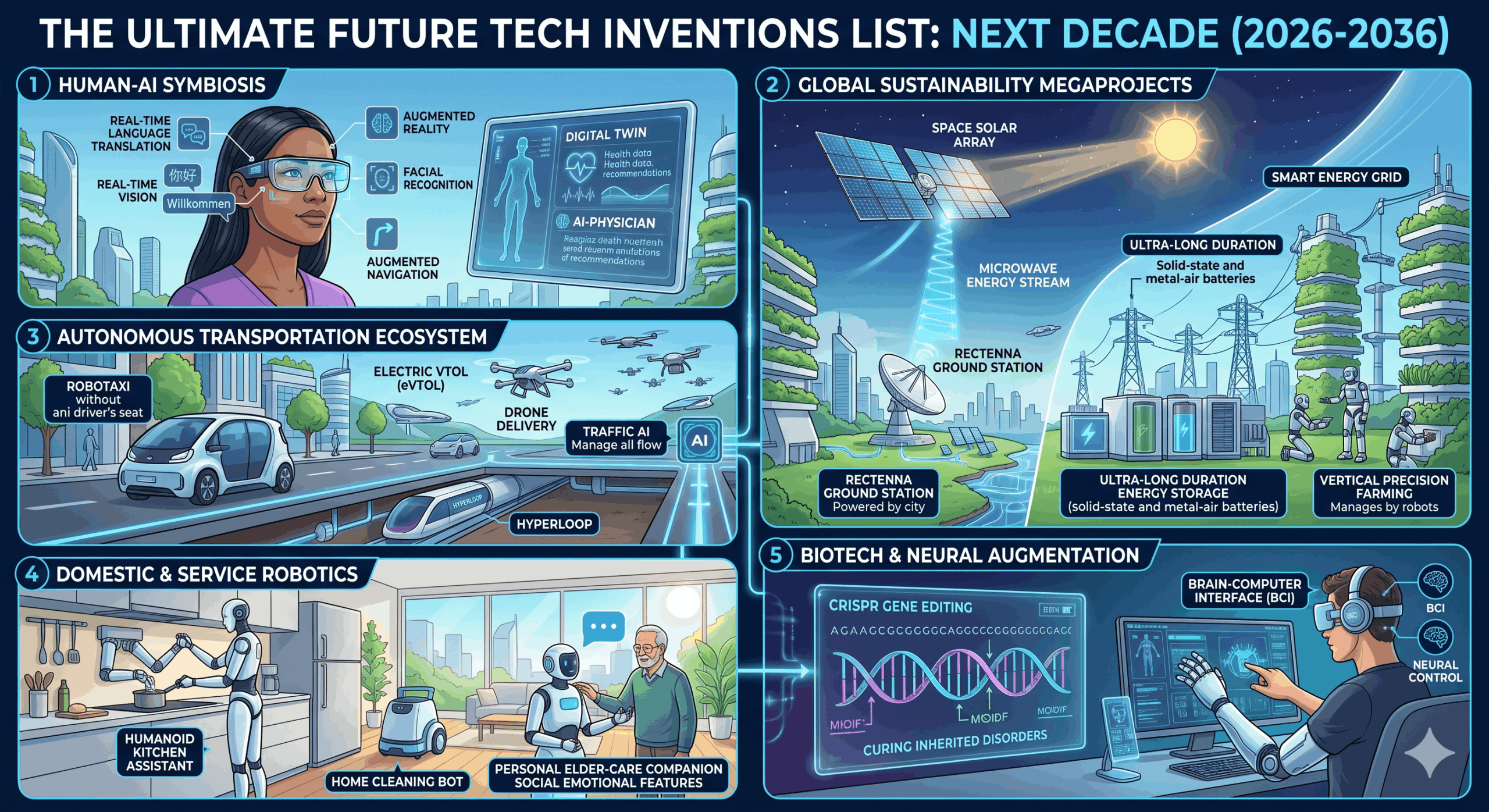
The Medical Breakthroughs Hiding in Plain Sight — Why 2030 Will Feel Nothing Like Today
My father reads the newspaper every morning. Has done for forty years. Last month he called me, genuinely upset, after reading about a woman who waited nine years for a liver transplant and died three weeks before a match was found.
“Why can’t they just make one?” he asked.
I paused. Because the honest answer is they’re working on exactly that. And not in a “maybe someday” way. In a “skin grafts are already printed and working in burn units today” way.
That conversation stuck with me. Because my father is smart, curious, and reads every day—and still had no idea. Which tells me the information exists, but it isn’t reaching the people who need it most.
So here’s my attempt to fix that. No jargon. No hype. Just the future tech inventions that are happening now, and why they matter to you personally.
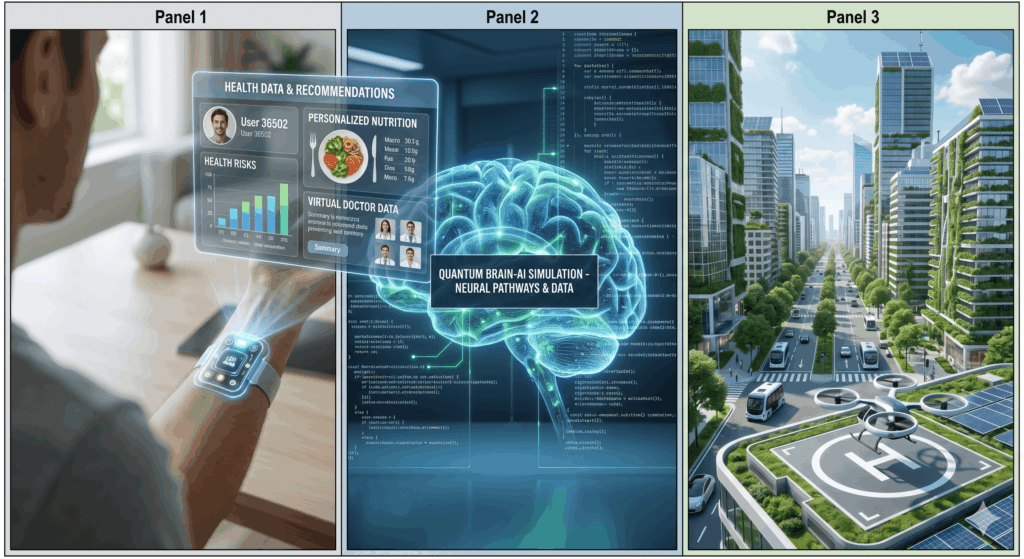
Rewriting Inherited Illness — Not Managing It Anymore
For generations certain families just carried their burden. Heart conditions passed from parent to child. Blood disorders appearing like clockwork across siblings. Connective tissue diseases moving quietly through maternal lines. Medicine got better at managing these things but rarely at ending them.
That’s genuinely changing now.
CRISPR gene editing — a biological tool derived from how bacteria naturally fight viruses — allows scientists to locate a specific error inside human DNA and correct it. Not mask it. Not slow it down. Actually, fix the underlying mistake that causes the condition.
A thirteen-year-old girl in the UK had leukemia that defeated every treatment her doctors attempted. Chemotherapy failed. Bone marrow transplants failed. Her parents were quietly preparing for the worst. A research team used CRISPR to reprogram donor immune cells—rewriting their genetic instructions to target her specific cancer—and reintroduced them into her body.
She went into complete remission. Went home. That happened in 2022.
Since then, researchers have used gene editing to treat sickle cell disease, restore functional vision in patients with hereditary blindness, and interrupt specific cancer mutations. The technique is barely a decade old. The pace of new applications is, moreover, accelerating, not slowing.
The word “hereditary” is slowly losing its finality. For families who have watched the same conditions pass through three or four generations without anyone escaping, that shift is enormous.
Printing the Organs We Don’t Have Enough Of
Back to my father’s question. Can they just make one?
Bioprinting uses a patient’s own living cells as biological material—layering them, shaping them, and building tissue that the body accepts without resistance because it recognizes the cells as its own. No foreign material. No immune system conflict.
Printed skin grafts are already being used on burn patients today. Blood vessels, cartilage, and liver sections have been successfully produced in controlled research environments. Full organ printing—kidneys, hearts, lungs—is the active frontier, and researchers are speaking in years now, not decades.
The detail that changes everything: an organ grown from your own cells carries zero rejection risk. Your immune system simply accepts it. This eliminates the lifelong dependency on immunosuppressant medication that every current transplant recipient lives with—tablets taken every morning without exception, because missing doses risks the body attacking the transplanted organ.
Remove that dependency and you remove a massive shadow that hangs over every transplant success story.
Twenty people die every day in the US alone waiting for a compatible donor organ. Some of those people have been waiting longer than a decade. This technology doesn’t just improve transplant medicine — it fundamentally solves the supply problem that makes the waiting list exist in the first place.
Your Body Has Been Trying to Tell You Things. Soon You’ll Actually Hear It.
A work colleague of mine participates in medical technology research trials. Last year his wearable device detected an irregular cardiac rhythm pattern across three consecutive nights. He felt completely normal — no symptoms, no warning signs, no reason to worry.
He mentioned it almost as an aside at his next checkup. Early arrhythmia. Caught before any damage occurred. Being managed now with straightforward intervention.
Without that device the story ends differently.
Next-generation health wearables—several already in late development—will monitor blood glucose continuously without any needles breaking the skin. Track cortisol levels throughout the day—the stress hormone that quietly damages cardiovascular health when chronically elevated. Flag inflammatory patterns weeks before they produce any physical symptom.
The difference from what exists today isn’t the data collection. It’s the personalization. These devices learn your specific biological baseline over weeks and months—not a population average, but your individual normal—and recognize meaningful deviations from it early. Before the problem becomes urgent. Before the window for easy intervention has closed.
Preventive medicine has always been a nice idea that healthcare systems struggled to deliver in practice. Continuous personalized monitoring, however, makes it genuinely achievable for the first time.
The Quiet Revolution Already Inside Hospitals
In 2020 an artificial intelligence system solved a biology problem that had resisted researchers for fifty years — predicting precisely how proteins fold into their three-dimensional shapes from genetic sequences. Scientists described it as one of the most significant breakthroughs in the history of the field. It unlocked research directions that simply hadn’t been accessible before.
It got three days of headlines and then disappeared from public conversation entirely.
This is the pattern. Real, consequential breakthroughs move quietly through journals and clinical systems while louder, glossier stories dominate attention.
Right now AI diagnostic systems are reading medical imaging in hospitals and catching early-stage cancers that experienced radiologists miss. Predicting which intensive care patients are approaching a crisis hours before clinical warning signs appear — giving medical teams time to act rather than react. Identifying early retinal disease before patients notice any change in their own vision.
The physician remains central and irreplaceable. But working alongside a system that has effectively studied millions of cases and operates without fatigue or distraction changes what’s detectable. Earlier detection, therefore, changes treatment outcomes—across virtually every serious condition, catching something early dramatically improves the odds.
What My Father Deserved to Know
He asked a simple question — why can’t they just make one?
The answer is they’re figuring it out, and faster than anyone outside research circles realizes. Organ printing. Gene correction. Continuous health monitoring. AI that catches what human eyes miss.
None of this is science fiction sitting safely in some distant future. These are active technologies with clinical applications today and accelerating timelines toward widespread availability.
The people who need this information most are often the ones furthest from it. Families sitting with inherited diagnoses that felt like verdicts. Patients on waiting lists measuring hope in years. People managing chronic conditions who’ve accepted a certain ceiling on their quality of life because nobody told them the ceiling was moving.
My father reads the newspaper every morning looking for exactly this kind of news.
So do millions of people who deserve to find it.