
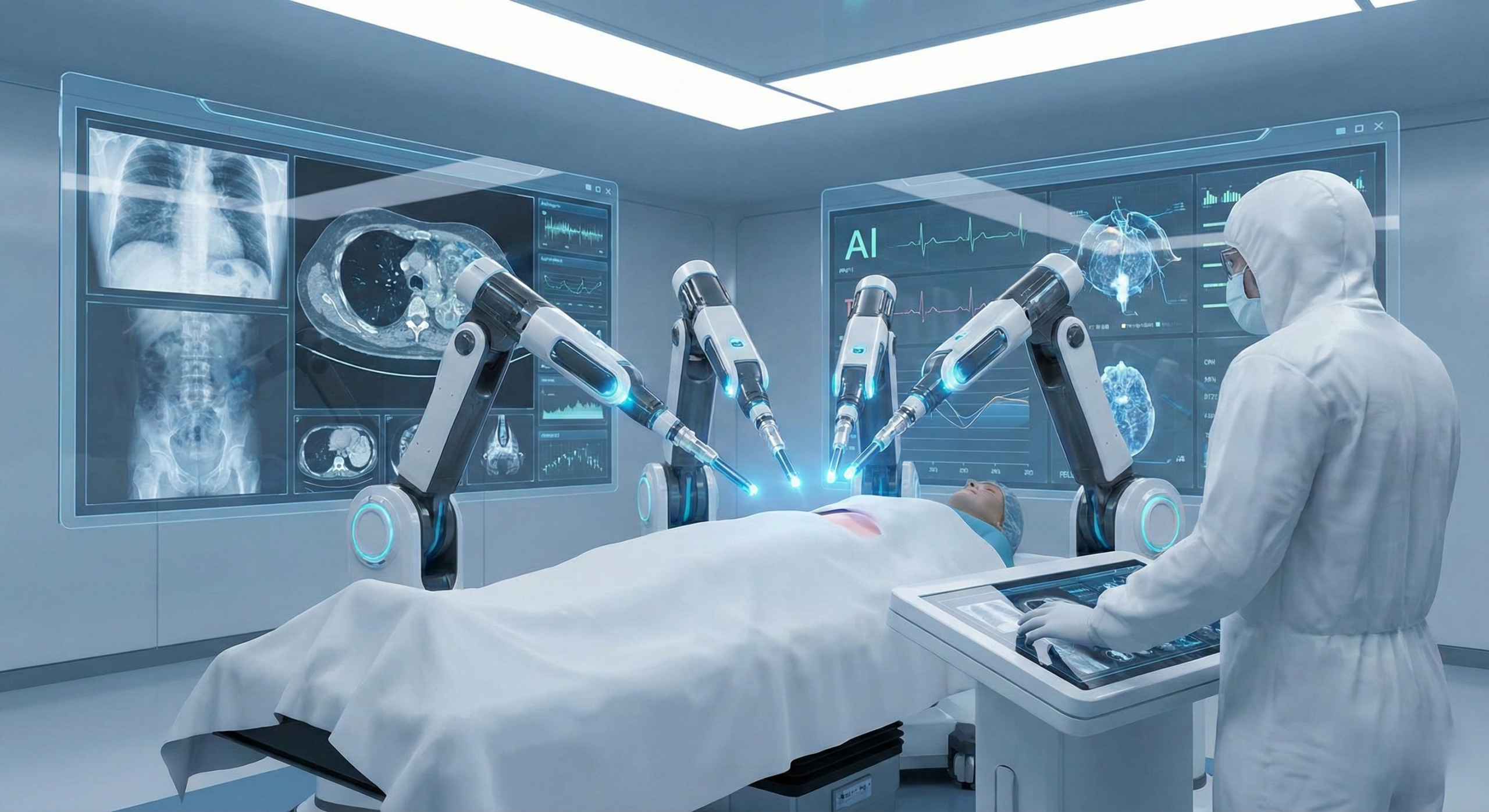
Artificial intelligence is no longer a dream of sci-fi, and it is now a powerful tool in our lives. Real-life uses of artificial intelligence in the future, from healthcare to education, will change how we work and communicate. They will also change how we care for our health. As AI evolves, it will bring smarter solutions, faster decisions, and personalized experiences to people worldwide.
This guide explores how AI will transform the real world in the near future. It uses practical examples that are easy to understand.
What Is Artificial Intelligence, and Why Does It Matter?
Artificial intelligence (AI) refers to machines or software that can learn and analyze information. These systems can make decisions much as humans can. AI systems are not based on strict rules. Instead, they develop over time with patterns and data.
Why AI is becoming essential
It saves time in that it automates the repeated tasks.
Helps companies to make smarter decisions.
Improves healthcare outcomes.
Creates bespoke user experiences.
Promotes innovation in industries.
Above all, AI is not replacing human beings. It helps them work smarter and more efficiently.
Future uses of artificial intelligence in the healthcare industry.
Overall, healthcare is one of the largest areas where AI will improve everyday life.
Synthetic intelligence diagnosis and therapy.
The AI tools will come in handy to the doctors in the future because:
Medical imaging in earlier diagnosis of diseases.
Health risks are predicted using patient data.
Prescription of personal therapy.
As an example, artificial intelligence can be applied to search through thousands of reports in several seconds to help doctors generate faster and more accurate verdicts.
Smart health monitoring
Smart AI-driven wearables will:
Heart rate and sleep pattern measurement.
Predict potential health issues.
Emergencies can be prevented by sending alerts.
This helps individuals take control of their health proactively, not just react to symptoms.
Artificial Intelligence in Our Daily Lives and Smart Homes.
It will blend into family life and individual lifestyles.
Artificial assistance and roboticists.
The future artificial intelligence devices will not only serve the function of reminding. They will:
Get informed on things through voice tone.
Manage domestic power use.
Auto-order groceries when they run low.
Imagine when you wake up in the morning and see yourself in a home that will switch lights, temperature, and music based on your mood.
Personal entertainment services.
For example, streaming sites already use AI to suggest content. In the future, AI could also:
Create personal exercise or meditation programs.
Propose healthier lifestyle choices.
Make schedules of learning and productivity individual.
Artificial Intelligence in Learning: Smarter Learning.
Artificial intelligence will transform education.
Individual education regimes.
AI will study how students learn and adjust lessons to match.
Benefits include:
Customized study plans
Immediate performance evaluation.
Interactional learning.
Students who struggle with certain subjects will receive special attention. Gifted learners, in turn, will get opportunities to advance further.
Virtual tutors powered by AI
AI tutors can become commonplace in the future, and they help students:
Practice languages
Learn technical skills
Examinations on the subjects in the course of study at any time, anywhere.
This enhances access to good education in this world.
Artificial Intelligence in Business and Workplaces.
The application of AI in businesses is not new but will become more convenient even in the future.
Automation of routine tasks
AI can handle monotonous tasks such as
Data entry
Customer service chats
Scheduling and reporting
This allows the employees to focus on innovative and tactical operations.
Better predictive analytics decision-making.
Companies will use AI to:
Forecast market trends
Optimize supply chains
Improve customer experiences.
In particular, small business owners will benefit as AI becomes cheaper and more accessible.
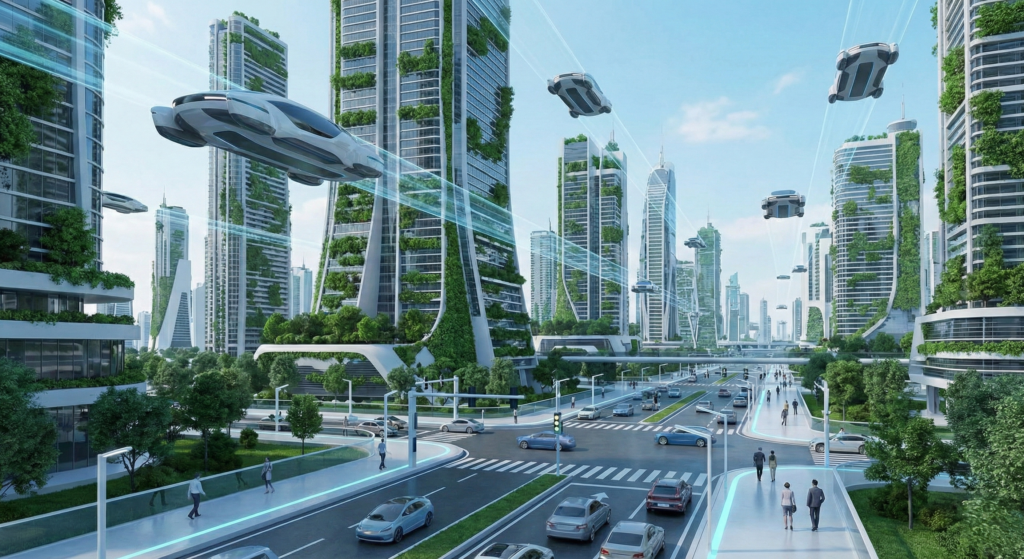
Smarter and safer travel: smart robots and smart transportation.
Moreover, the other area that AI would revolutionize in real life is transportation.
Robotized and autopilot cars.
Future AI systems may:
Minimization of accidents with real-time monitoring.
Improve traffic management
Use fuel-efficient routes as a way of conserving energy.
Intelligent transportation.
Artificial intelligence can also help cities build better transport systems. It analyzes movement patterns and, consequently, reduces traffic jams.
Ethical Consequences and Issues of AI.
Despite its long list of benefits, AI also brings problems.
Key concerns include:
Data privacy and security
Automation as a job killer.
Bias in AI algorithms
In summary, the future of AI lies in responsible development and in human hands.
The Artificial intelligence Benefits in Future in our Every-day Life.
In brief, here is how AI will improve daily living:
Faster healthcare services
Personal learning and exercises.
More environmentally friendly homes and power conservation.
More efficient workplaces
The transport systems are safer.
These kinds of developments should enhance the quality of life and not leave the human skills behind.
Conclusion
Real-life uses of artificial intelligence are not only in the future. Much of it is already happening today. AI will make healthcare, education, homes, and businesses smarter and more efficient. As technology shifts, humans and AI can find a balance that benefits the world.
Therefore, knowing these future applications prepares us for that reality. Artificial intelligence will serve as a handy tool in our lives.
Most Popular Google Questions about Real-Life Uses of Artificial Intelligence in the Future.
What are the effects of artificial intelligence in the future in everyday life?
A.I. will also automate the processes, customize services, improve monitoring of healthcare, and even make houses and offices smarter.
Will man become jobless at the hands of artificial intelligence?
Not completely. AI will automate work in certain areas. New roles will also emerge, requiring creativity, planning, and personal contact.