
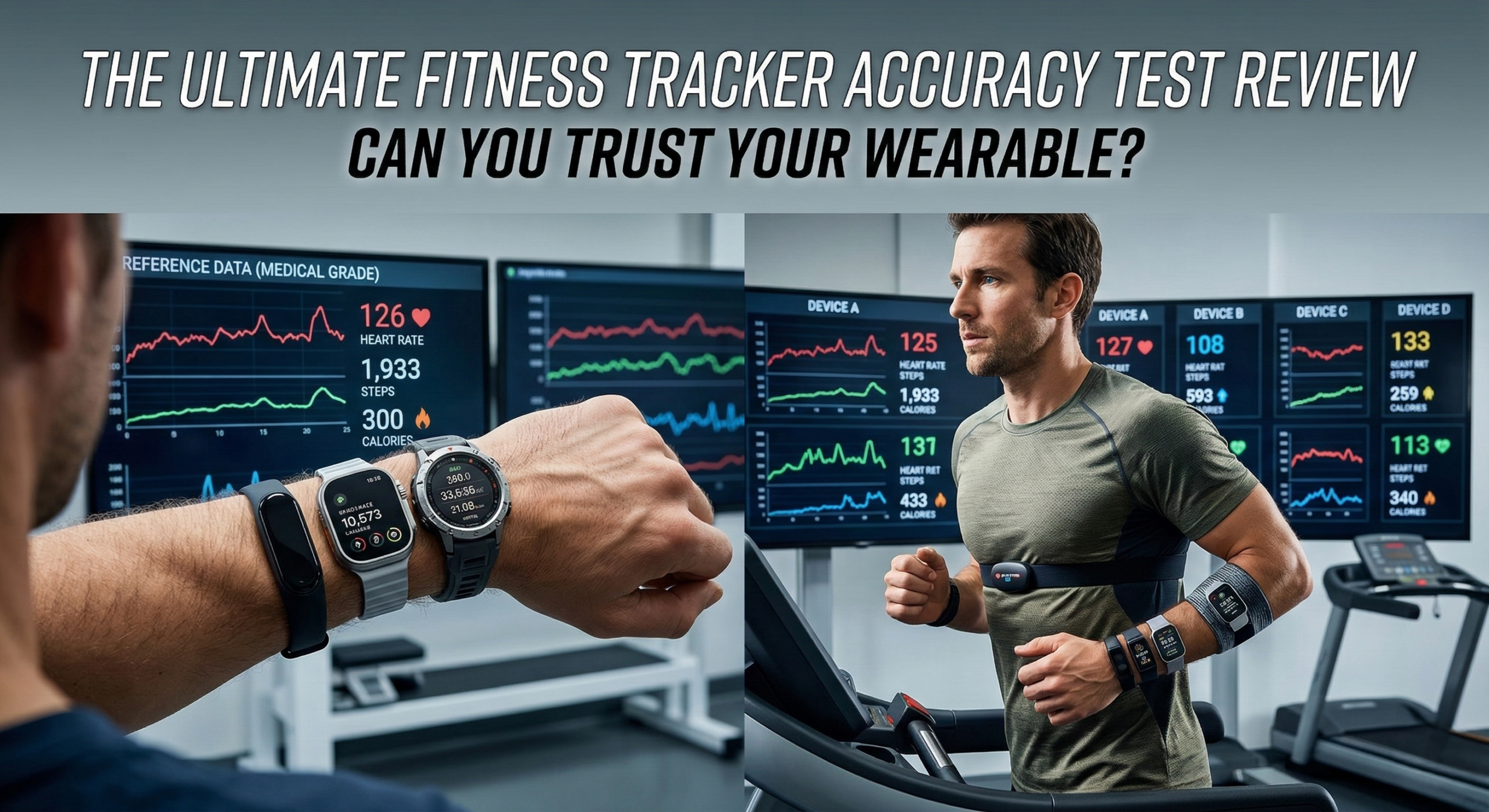
This is the era of mind-bending technological advances. Generative AI is increasing, and potential quantum computing breakthroughs are on the way. Our world is changing at an immensely rapid pace. However, despite such enormous strides into the future, millions of ordinary health enthusiasts ask an even more basic question. Is my smartwatch telling the truth?
When you plan your diet, sleep routine, and workout intensity with the numbers on your wrist, ask yourself one thing. Can you be confident in such data? The following is our fitness tracker accuracy test review. Now, it’s time to explore the technology, the experimentation, and the facts behind wearable health tech. Then you can determine whether your piece of technology is a supportive trainer or a teched-out guesser.
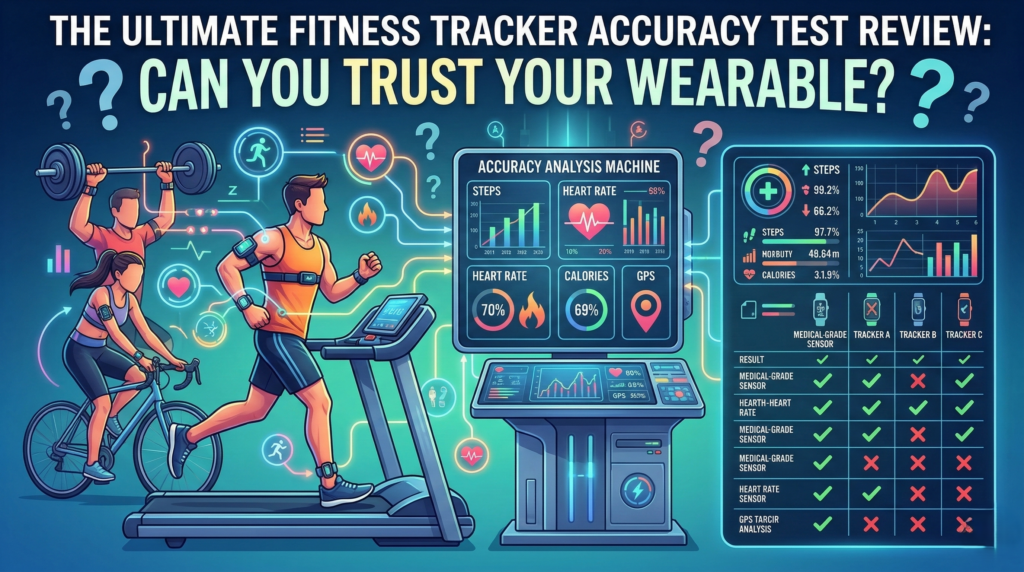
The Need for a Fitness Tracker Accuracy Test Review.
The health and fitness industry is data driven. You are eager to put on a few pounds or have your first 5K race in a month. Or you may just work out to get your heart rate better. You rely on your wearable device to help you do it.
Nevertheless, there is a problem of blind trust. In case your tracker is overestimating the number of calories burned per day, then you may end up overeating. When it reads your heart rate wrong, you may not be working hard enough. Or you may be working yourself into real trouble. This is precisely the reason why periodic accuracy checks are essential to the consumers.
Core Metrics Put to the Test
To present you with a real-life point of view, we will disaggregate the performance of the trackers. We will use the four most widely used health measures.
Step Counting: Reality or Imagination?
Fitness wearables depend on step counters. Most trackers have their own in-built accelerometers. They determine how your arm is swinging and convert these swings into steps.
The Good: When you walk or run along a straight, non-strenuous path, most high-end trackers are very precise. The error is no more than 5 percent.
The Bad: When you talk with your hands or wash dishes, the tracker gets easily confused. The same happens when you push a shopping cart. This results in a ghost step.
Cardiac Monitoring: Is It Hospital Quality?
New wearables include optical sensors (PPG). They shine green light through your skin to monitor the changes in the blood flow.
The Good: The measurements of the resting heart rate (RHR) are astonishingly precise. This is true for large brands such as Apple, Garmin, and Fitbit.
The Bad: During high-speed exercise with intervals of intense training (HIIT), optical sensors tend to lag or lose track. The same happens during weightlifting, when wrists move violently. They are nice; however, they cannot substitute a serious chest strap monitor with athletes.
Sleep Tracking Accuracy: Choose How You Sleep.
Sleep tracking combines movement data and heart rate variability (HRV). It uses them to infer what sleep stage is occurring.
The Pros: Trackers do a great job in informing you of the time you fell asleep and when you were awake.
The Nasty: Distinguishing between REM, light, and deep sleep is more of a guess than an educated guess. Despite the advances in the algorithms, the consumer wearables have not yet defeated the clinical sleep lab equipment.
Calorie Burn Estimates: The Misleading Metric.
One of the issues in our fitness tracker accuracy test review revealed glaring problems. It is calorie expenditure.
Trackers estimate the calories burned using your age, weight, height, and heart rate.
Studies show that wearables claim to burn more calories than they really do. The overestimate is anywhere between 10 and 40 percent. Do not make your tracker a hard and fast guide on the amount of food you may consume.
The Magic of Trackers: Better Accuracy.
There is still no need to put your smartwatch in the trash. You can significantly enhance the quality of the information you have using the following few steps:
Put it on correctly: The band must not be too tight around the bone of the wrist. Otherwise, the optical sensors will not read correctly.
Clean the sensors: Lotion, sweat, and skin cells may block the light sensors. Clean your watch with a towel after each workout.
Right arm: Place the tracker on your non-dominant hand. Then it will not count the steps of your daily activities.
Software update: Always update your software with new firmware releases. Manufacturers keep advancing their proprietary tracking algorithms, so this is extremely important.
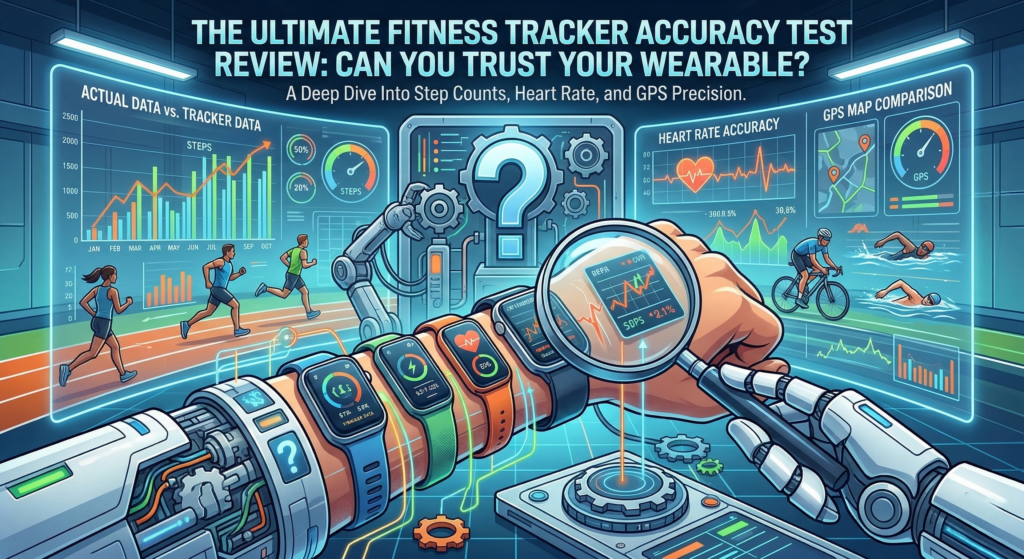
Conclusion: The Final Decision on Wearable Reliability.
In conclusion to our review of the accuracy of fitness trackers: the new wearables are terrific motivational devices. They are not perfect medical devices. They are good with long-term trends. For example, they can show that your resting heart rate is getting progressively slower over a month of cardio training. But they falter at absolute minute-by-minute accuracy. Your fitness tracker is like a compass. It shows the broad directions you need to take to become healthier, not a rules letter
Frequently Asked Questions (FAQs)
Do Fitbit gadgets work with 100% accuracy?
No, none of the consumer fitness trackers is 100 percent accurate. They offer highly educated estimates based on algorithms and sensors. Still, they all have a small margin of error depending on the activity.
What is the best heart rate tracker on a fitness tracker?
Several independent tests agree. The Apple Watch and the expensive Garmin lines (such as Fenix or Forerunner) offer the best wrist-based heart rate monitoring on the market.
Is excess calories burned by fitness trackers?
Yes, frequently. Research indicates that most fitness trackers exaggerate the intake of calories. Calorie measures are better used to compare the relative intensity of various exercises. Do not take them directly as a dietary allowance.
Do trackers on my dominant hand influence my step counting?
You use your dominant hand more often in your daily chores, such as brushing your teeth or opening the door. So a tracker on that wrist will tend to give your steps an artificially high count.
Should I trust my fitness tracker as medical advice?
Well-known premium trackers offer FDA-approved capabilities, such as ECG apps to identify atrial fibrillation. But they are not meant to diagnose or treat health issues. They support well-being and preventive measures instead. A health concern should always go through a doctor.