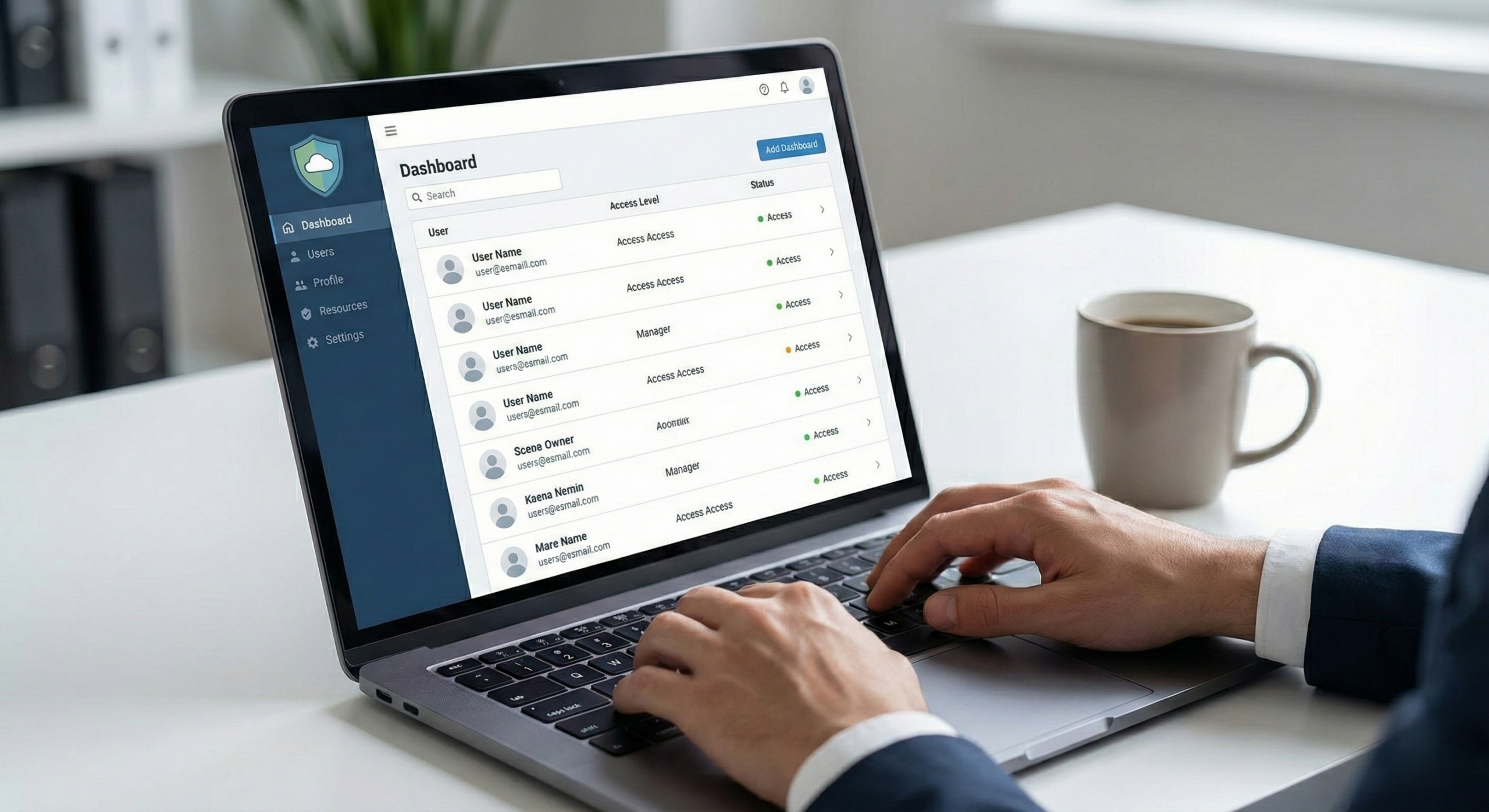
The security of confidential data is no longer the issue of huge corporations in the modern online-driven first world. Cyber threats do not spare small businesses either. That is where affordable IAM tools for small businesses come in. Identity and Access Management (IAM) solutions let you control user access and reduce risks. They also keep you compliant without breaking the bank.
This guide explains what IAM is and why it matters. It also shows how to select cost-effective tools that help your business grow securely.

What are IAM tools, and why are small businesses in need of them?
The Identity and Access Management (IAM) tool enables the organization to monitor digital identities and application access, networks, and data.
In the case of small businesses, IAM will avail:
Further protection against unauthorized access.
To have the capability of obtaining improved employee permission.
Eased log-in processes.
Adherence to privacy laws.
Without proper IAM, companies risk data leakage and loss of money. Their reputation can be tarnished too.
The main advantages of the low-cost IAM solutions.
It is very likely that small firms will have minute IT resources. Free IAM solutions have
Implementation with low technicality is easy.
Cloud-based management
Automation of user onboarding/offboarding.
Additional security: Multi-Factor Authentication (MFA).
Attributes that should be added to IAM tools in small businesses, which are inexpensive.
The question of the necessity and economic feasibility is related to the appropriateness of the IAM solution. Give emphasis to big features instead of business gimmicks.
Single Sign-On (SSO)
SSO lets a user log in once and access several apps.
Benefits include:
Reduced password fatigue
Faster workflows
It will lower the price of password reset assistance.
Multi-Factor Authentication (MFA)
Another password protection is MFA.
Look for:
App-based verification
SMS or email authentication
Biometric options
Role-based Access Control (RBAC).
RBAC also offers job role permissions.
This helps you:
Limit sensitive access
Reduce human error
Improve compliance
User Lifecycle Management
Automation is a prerequisite to the growth of business.
Key capabilities include:
Automatic account creation
Termination of access on automatic termination of employees.
Integration with HR tools
Best Product of IAM Solutions on a team of small size.
Not every small business needs enterprise-level IAM. Here are the general categories worth knowing.
Cloud-Based IAM Platforms
The popularity of cloud IAM tools is pegged on the fact that they:
Require no hardware
Offer flexible pricing
Scale as your business grows
They are perfect in remote working and startups.
Open-Source IAM Tools
Open solutions may be cost-effective.
Pros:
Low upfront costs
Customizable features
Cons:
May require technical competence.
Limited official support
Full-fledged One Intrusion Prevention Products.
The cybersecurity solutions have some IAM functionality.
These tools combine:
Password management
Access monitoring
Endpoint security
The Affordability of IAM Tools to Enhance Business Security.
An investment in IAM is more than a technological problem, but it is a problem of trust.
This is advantageous to the small businesses because it:
Dispose of unauthorized logins.
Real-time monitoring of user activities.
Reduce insider threats
Enhance customer information security.
Even simple IAM solutions greatly reduce the risk of a breach.
Recommendations to select a suitable IAM tool with a budget.
Here is what you are expected to do prior to investing with a platform:
Begin with the list of what you need: Name the systems and apps that you use on a regular basis.
Check integrations: You must have the IAM tool tied in with your software stack.
Pricing: Small groups usually do well using monthly subscriptions.
Free trial tests: Testing will be useful to point out the problems of usability within a short time.
Scalability Make this a priority: Select scalable tools.
Wrong Choices of the Small Businesses Making IAM.
The implementation traps that ought to be circumvented whenever using IAM solutions are:
Establishing an equal access for all the workers.
Ignoring MFA to save time
Choosing tools that are too complex.
Lack of training the staff on the security practices.
The considerate and simplified IAM plans will be more suitable in intricate environments.
The Future of the Small Business IAM Tools of the Cheap.
The IAM technology evolves very fast. The solutions that are in place have been incorporated in:
AI-powered threat detection
Passwordless authentication
Zero Trust security models
Cheap IAM tools will be part of every small business cybersecurity plan. The number of cyber threats keeps growing.
Conclusion
An IAM solution helps small businesses enhance security, automate operations, and control user access. It does so without requiring much investment. A small team can handle essentials like SSO, MFA, and role-based access control. That keeps sensitive information safe and productivity high. The right IAM solution does not have to be costly. It must simply support your operations and grow with you.
The Affordable IAM Tools: Frequently Asked Questions in the small business environment.
What is the endpoint of IAM tools?
IAM technology regulates user identities. Only authorized users can access specific systems or information, which enhances security and compliance.
Do the little companies feel secure enough about inexpensive IAM equipment?
Yes. Most low-priced IAM systems offer excellent security options. These include MFA and encryption that satisfy small business needs.
Are IAM solutions necessary for small businesses?
Absolutely. Even small organizations face threats from cybercriminals. IAM prevents unauthorized access and information loss.
What am I missing with an inexpensive IAM tool?
Look for single sign-on, multi-factor authentication, role-based access control, and straightforward integrations.